
Trek Overview


The Complete Guide To Trekking The Majestic Buran Ghati Trek
Buran Ghati Trek is a highly diverse trek and a thrilling pass that lies at a high altitude of 15,000 feet in the heart of Himachal. This amazing trek starts from Janglik and is perfect because it has got all the adventure which also includes sliding down and Rappelling down a snow wall.
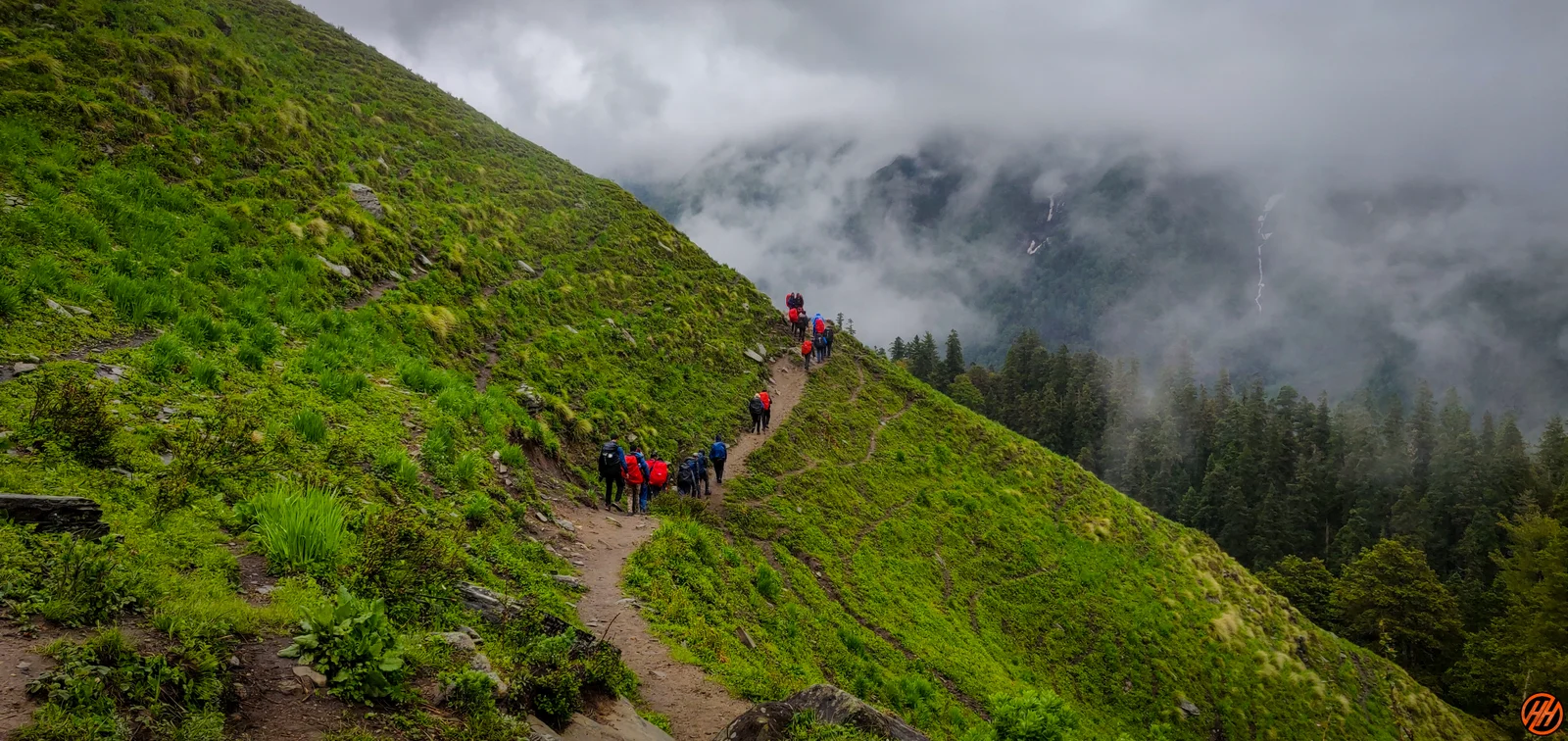
It is known for its stunning natural beauty, offering trekkers a chance to explore the pristine landscapes of the Himalayas. Therefore, witness the changing landscapes, diverse vegetation, superb mountain views, verdant forests, and quaint idyllic villages during your trek.
Buran Ghati Trek Complete Guide
Our mission has always been to ensure that no trekker steps into the Himalayas without the right perspective. A trek is not just a checklist of summits; it is a serious commitment to the outdoors. Having the right information is what separates a reckless climb from a soulful journey.
This section serves as your definitive manual for the Buran Ghati Trek. We have distilled years of mountain experience and real-time feedback into this guide to give you a clear, honest picture of the trail.
We provide this depth of information because we want you to be more than just a visitor—we want you to be a prepared, responsible trekker who respects the mountains as much as we do.
Trek Itinerary
1: Short Itinerary
Overview: Trek Summary at a Glance
Day 1: Pickup from Shimla at 7:30 AM, drive to Janglik village by taxi
Drive Distance: 160 km | Duration: 8–9 hrs | Altitude: 2,804 m | Stay: Overnight stay in Homestay (Janglik)
Day 2: Trek from Janglik village to Dayara Thach
Trek Distance: 4 km | Duration: 4–5 hrs | Altitude: 3,376 m | Stay: Overnight stay in Camp (Twin sharing)
Day 3: Trek from Dayara Thach to Litham
Trek Distance: 3 km | Duration: 3–4 hrs | Altitude: 3,578 m | Stay: Overnight stay in Camp (Twin sharing)
Day 4: Short Hike to Chandranahan Lake and return to Litham
Trek Distance: 6 km | Duration: 4–5 hrs | Altitude: 4,327 m | Stay: Overnight stay in Camp (Twin sharing)
Day 5: Trek from Litham to Dhunda
Trek Distance: 4 km | Duration: 6–7 hrs | Altitude: 4,075 m | Stay: Overnight stay in Camp (Twin sharing)
Day 6: Trek from Dhunda to Buran Pass and descend to River Camp
Trek Distance: 8 km | Duration: 7–8 hrs | Altitude: 4,572 m (Pass), 3,597 m (Camp) | Stay: Overnight stay in Camp (Twin sharing)
Day 7: Trek from River Camp to Barua and same day drive to Shimla
Trek Distance: 5 km | Drive Distance: 275 km

2: Detailed Day-wise Itinerary
A Complete Route & Campsite Breakdown
Detailed Day Wise Itinerary - Day - 1
Day 1 : Pickup to you from Shimla Drive to Janglik village by taxi (160 Km) (6/7 Hours) Altitude – 2,804 Meter
Total distance – 160 km – 6/7 Hours journey | Mode of journey – By taxi | Altitude Janglik – 2804 Meter Night stay – Home stay at Janglik Village
The vehicles are arranged from Shimla and the journey starts from there. Cover 160 km’s by going through some fable tourist attraction like Shimla, Rohru Fall by following the route through Janglik Village.
Enjoy the drive along the clear bluish Pabba River and witness the changing sights and quaint villages of Himachal. Crossing Pabbar leads to Diude and from Diude a short hike will take you to Janglik Village Overnight stay our home stay.
Day - 2
Day 2 : Trek from Janglik village to Dayara Thach
Total distance – 04 km – 4/5 Hours journey | Mode of journey – On foot | Altitude Dayara Thach – 3376 Meter | Night Stay – Our Camp site – on twin share basis
Start the trek by coming out of the wheat fields, bid goodbye to the last few Diude huts. Further you gain altitude and Tangle, Diude and other pretty villages can be seen clearly. Enter the forest of pine and oaks and ascend gradually.
After half an hour hike, the tree line recedes and you come across stretch of meadows. Climb up and reach the hill with mountain views on one side and lush trees on another. From here descend gradually on a wide trail.
After an hour again enter the dense pine and oak forest, walk under the shade of trees, listen to the crumbling of leaves and move further.
Before reaching Dayara the trail climbs up gradually. Reach the campsite, setup your tents and sleep comfortably. Enjoy trekking life with us
Day - 3
Day 3 : Trek from Dayara Thach to Litham camp (03 km) (3/4 Hours) (3578 Meter)
Trek Distance – 03 km – 3/4 Hours journey | Mode of journey – On foot | Altitude Litham – 3578 Meter | Night Stay – Our Camp site – on twin share basis
After breakfast, explore the Dayara meadows in the morning. Today, the trail from Dayara to Litham goes through thick forests, alluring green meadows and clear streams. Through meadows trail head towards Gunas Pass and after fifteen minutes enter the pine forest. Cross a stream and exit the forest section with delicious views of Dhauladhar range and Gunas Pass.
Ahead the grasslands look wonderful and magical, after half an hour the trail makes its way through another forest of Bhoj. Descend through this section and reach a stream from where Litham is clearly visible. The trail after the meadows goes to Chandranahan stream which needs to be crossed before reaching Litham.
Cross it and reach your campsite, there are plenty of streams across Litham. From here get mesmerized by the mind boggling mountain views. Towards left you can see the Chandranahan Waterfall and ahead lies Chandranahan Lake. Towards right are cliffs with snow patches behind which lies Rupin valley and in front are snow-covered mountains at their back lies Buran Ghati.
This is the last meadow on this trek, a wide one. Setup your here, relish the beautiful views and then retire for the night.
Day - 4
Day 4 : Short hike to Chandranahan Lake (4327 Meter) Explore some time here and back to Litham camp
Trek Distance – 06 km – 4/5 Hours journey | Mode of journey – On foot | Altitude Litham – 3578 Meter | Night Stay – Camp site – on twin share basis
Chandranahan is a small glacial lake amidst mountains and snow flanks feed this Lake. Take the shepherds trail to reach the Ridge Top and head towards the waterfall’s snout. In one hour you can reach the Lake but the journey gets difficult after the snout.
Witness the alpine valley and delicious views! The setting of this Lake is idyllic, grassy patches are in middle and small waterfalls turn into small streams. There are rough rocks which mark the lake, look at the settings and head back to Litham.
Descent is steep till Litham, make sure you start early to Chandranahan Lake so you can reach there at mid-day. Overnight stay camp
Day - 5
Day 5 : Trek from Litham camp to Dhunda Camp
Trek Distance – 04 km – 4/5 Hours journey | Mode of journey – On Foot | Altitude Dhunda camp – 4075 Meter | Night Stay – Our Camp site – on twin share basis
Today after breakfast, the climb to the pass is steep but short and today Buran Pass will be visible on the way.
Dhauladhar range and Gunas Pass can be seen en route with. It is a setting in front of Latham’s green grasslands and cliffs Rupin valley.
Pabbar descends rapidly and the trail gets sharply an ascending one. The trail turns to a gorge valley when you follow the river’s left bank.
From here Buran Ghati comes into sight. The shepherds trail will lead you to Dhunda.
After one hour of climb, reach Dhunda’s ridge top. From the top enjoy the clear and magnificent views of Buran Ghati.
Reach the campsite; it lies amidst snow-capped mountains from all the sides. Even in late June there you can find the patches of snow everywhere.
Day - 6
Day 6 : Trek from Dhunda to Buran Ghati Pass (4572 Meter) and River camp.
Total distance – 08 km – 7/8 Hours journey | Mode of journey – On foot | Altitude Buran Ghati Pass – 4572 Meter | Night Stay – Our Camp site – on twin share basis
Today wake up early because the distance is long, difficult Leave the campsite of Dhunda following the ridge and do boulder hopping to reach the base of the Buran Pass.
Reaching the Pass will take one hour from the base.
Today, ascent to Buran Ghati will be exhilarating. It is a narrow surface on the top, use ropes to descend because it can be very risky without it.Below you have to reach a snow field which is at a distance of 100 meters.
Slide down the surfaces which are present in series. Descending doesn’t take time on this trek, you lose the altitude which you gained in just one go.
Reach the end of snow line by losing 3000 feet. Descend through a ridge with blooming flowers and green shrubs.
The lush green valley views are really pleasant and the mountains towering high makes it look more beautiful. Ahead you will cross a stream, reach there in an hour.
Cross the stream and a hut will be visible. Today camp here and retire for the night
Day - 7
Day 7 : Return : Trek from River camp to Barua (05 km) Same day Drive to Shimla
Trek Distance – 280 km – 10/11 Hours journey | Mode of journey – On foot – 05 km and by taxi – 275 km
Today on the trail come across diverse vegetation and get surprised by the changing landscapes. Follow the wide and frequently used Barua Khud’s path.
Descend and ahead see a stream meet Barua Khud, cross it over a bridge and explore the diverse vegetation. After hiking for one hour you reach apple orchards and further lies civilization.
There is a rock on the way from where the whole Barua village can be seen.
Enter this quaint Barua village there are many fruit orchards. Descend through it and now the trail gets you to the bridge over Barua Khud.
3: Buran Ghati Pass Trek Difficulty
How Difficult is Buran Ghati Pass Trek
The Buran Ghati Pass Trek is considered to be a moderately difficult to challenging trek.
Here are some factors that contribute to its level of difficulty:
- Altitude Gain: The trek involves a significant altitude gain. You start from relatively lower altitudes and ascend to over 15,000 feet (4,572 meters) when crossing the Buran Ghati Pass. Trekking at high altitudes can be physically demanding and may lead to altitude-related issues, so proper acclimatization is essential.
- Length: The trek typically spans over a week, covering a distance of approximately 37-40 miles (60-65 kilometers) one way. The long duration and distance can be physically demanding, and trekkers should be in good physical shape.
- Weather Variability: The weather in the Himalayas can be unpredictable, even during the best trekking seasons. Trekkers should be prepared for sudden weather changes, including rain and snowfall, and have suitable clothing and gear.
- Trail Conditions: The trail includes steep ascents and descents, rocky paths, and occasional snowfields, especially when approaching and crossing the Buran Ghati Pass. Navigating these terrain types can be physically challenging.
- Avalanche Risk: Depending on the season, there may be an increased risk of avalanches near the pass, particularly in the early summer months. Trekkers should be aware of avalanche safety and take necessary precautions.
- River Crossings: The trek includes several river crossings, which can be challenging during high water flow conditions. Trekkers should be cautious and ensure they have the necessary equipment and guidance for safe crossings.
- Remote Location: The Buran Ghati trek takes you through remote and less-visited areas. This means that access to emergency services and amenities may be limited. Trekkers should be self-reliant and prepared for emergencies.
- Physical Fitness: Given the challenging aspects of the trek, trekkers are advised to be in good physical condition with prior trekking experience.
Buran Ghati Pass safe for Beginners?
Yes, Buran Ghati Pass Trek is a safe trek if you are going with a good trekking team which you must know before booking yourself, It is important for you to know whether the bow trekking organization with which we are going is right or not, recommended for beginners or novice Trek Himalyan Soul due to its moderate to challenging nature and the various factors that can make it a demanding trek. Here are some reasons why it may not be the best choice for beginners.
Age Limit: The minimum age required to trek Buran Ghati Pass is 12 years and a maximum of 55 years. The rest depends on your fitness.
4: Best TIme to visit Buran Ghati Pass Trek ?
Best Time to Visit Buran Ghati Pass Trek?
Buran Ghati Pass trek is a very beautiful and Gradual uphill trek in the Himalayas, The Buran Ghati Pass trek is great for those people who have a great passion for mountaineering and consider it a special purpose in their life.
The best time to visit the Buran Ghati trek is during the post-monsoon season, which typically spans from late September to early October. This period is considered the ideal time for this trek for several reasons
- Weather: The post-monsoon season offers relatively stable and clear weather conditions in the region. The chances of heavy rainfall, snow, or adverse weather are reduced during this time, making trekking safer and more enjoyable.
- Landscape: The post-monsoon season brings lush, green landscapes with blooming alpine flowers and vibrant meadows. The trail is at its most scenic, offering breathtaking views of the surrounding mountains and valleys.
- Snow: While there may still be some snow at higher altitudes, it is typically manageable during this season. Trekkers can experience the thrill of crossing snowfields without the extreme cold and risk associated with winter trekking.
- Moderate Temperatures: Daytime temperatures during the post-monsoon season are usually comfortable for trekking, with temperatures ranging from 10°C to 20°C (50°F to 68°F) at lower altitudes. However, nights can be cold, so warm clothing is necessary.
- Wildlife: This season also provides opportunities to spot local wildlife, including birds and other fauna that are active in the region.
Buran Ghati Pass Trek in the month of May or June?
Trekking to Buran Ghati in May or June can be a different experience compared to the post-monsoon season, which is generally considered the best time for this trek.
- Snow: During May and June, significant snow can still be present at higher altitudes. This means that you are likely to encounter snow-covered trails and snowfields, which can add a unique challenge to the trek. Trekking in snow requires specialized equipment like gaiters, ice axes, and crampons, and you should be prepared for colder temperatures.
- Weather: While the days at lower elevations may be relatively warm, the weather in the mountains can be unpredictable. Be prepared for sudden weather changes, including rain or snowfall, and make sure to have suitable clothing and gear for such conditions.
- Avalanche Risk: In the early summer months, there can be an increased risk of avalanches in certain sections of the trek, especially near the Buran Ghati Pass. It’s crucial to have knowledge of avalanche safety and the local conditions if you plan to trek during this time.
- Camping and Accommodation: Some of the higher-altitude campsites may not be accessible in May and June due to snow cover. This may affect your itinerary and campsite choices. Some campsites may not be as lush and green as they are in the post-monsoon season.
Buran Ghati Pass Trek in July and August?
In the months of July and August, you will get to see beautiful flowers and green Bugyal beautiful Mountain range, this trek looks very beautiful in monsoon.
You also get a chance to do Chandranahane Lake along with this trek, for which people trek separately, you complete two treks with a single trek which can be very good.
There is some rain in the monsoon months of July and August, trek but it also has its own fun in trekking. and Not many people come here in monsoon, so you can have a peaceful atmosphere here.
Buran Ghati Pass Trek in September or October
Trekking to Buran Ghati Pass in September or October is generally considered an excellent time to experience this trek.
- Ideal Weather: September and October offer the best weather conditions for the Buran Ghati trek. The monsoon season is over, and the winter chill has not yet set in. Days are generally pleasant with temperatures ranging from 10°C to 20°C (50°F to 68°F) at lower altitudes, making it comfortable for trekking. Nights can be cold, so you’ll need warm clothing.
- Clear Skies: The skies are relatively clear, providing excellent visibility for enjoying the breathtaking landscapes and mountain views. You’ll have the opportunity to capture beautiful photographs of the surrounding scenery.
- Vibrant Landscapes: The post-monsoon season brings lush greenery and colorful blooms to the meadows and forests. The region comes alive with blooming alpine flowers, adding to the overall beauty of the trek. The landscapes are at their most vibrant during this time.
- Snow at Higher Altitudes: While lower altitudes may not have much snow, you can expect to encounter snow at higher elevations, particularly as you approach the Buran Ghati Pass. This adds an exciting element to the trek without the extreme cold of winter.
- Stable Conditions: The weather is relatively stable, and the chances of heavy rainfall or snowfall are minimal. This ensures a safer and more enjoyable trekking experience.
- Camping and Accommodation: All the campsites are accessible during this season, and you can enjoy lush and picturesque camping spots along the trail.
- Wildlife Sightings: You might have the opportunity to spot local wildlife, including birds and other fauna that are active during this time.
5: How to reach Base Camp ?
How to Reach Shimla for Buran Ghati Trek with Trek Himalyan Soul
To reach Shimla for your Buran Ghati Trek with Trek Himalyan Soul, you need to arrive at the assembly point in the city by early morning on Day 1. Trek Himalyan Soul coordinates transport from Shimla to the base camp at Janglik Village Started point Buran Ghati Trek
Assembly Point & Time
- Location: Old Bus Stand, Shimla.
- Pickup Time: Between 7:00 AM and 7:30 AM on Day 1.
- Final Destination: Janglik Village (approx. 160 km / 8-hour drive).
How to Reach Shimla
1. By Train (The Most Scenic Route)
- Nearest Major Station: Kalka (KLK).
- From Delhi: Take the Kalka Shatabdi or Himalayan Queen from New Delhi Railway Station. These trains are timed to connect with the toy train.
- From Kalka to Shimla The Toy Train: A UNESCO World Heritage ride (5–6 hours). It’s beautiful but slow.
- Taxi/Bus: If you are short on time, a taxi from Kalka takes about 3 hours to reach Shimla.
2. By Road (The Most Convenient Route)
- From Delhi: Most trekkers take an overnight Volvo bus from ISBT Kashmiri Gate or Majnu-ka-Tilla. Buses leave between 8:00 PM and 11:00 PM and reach Shimla around 5:00 AM to 7:00 AM—perfectly timed for the Trek Himalyan Soul pickup.
- From Chandigarh: Frequent buses and taxis are available from the Sector 43 Bus Stand (approx. 3.5 hours).
3. By Air
- Shimla Airport (Jubbarhatti): Limited flights and often cancelled due to weather.
- Chandigarh Airport (IXC): The most reliable airport. After landing, take a taxi or bus to Shimla (approx. 4 hours).
Pro-Tips for Your Group
- Arrive a Day Early: It is highly recommended to reach Shimla on "Day 0." This allows you to rest after a long journey and ensures you don't miss the 7:00 AM pickup due to bus delays.
- Last-Minute Supplies: Use your evening in Shimla to buy any last-minute trekking gear (socks, raincoats) at the Mall Road or Lakkar Bazar.
- Connectivity: Shimla is your last stop with high-speed internet. Mobile network becomes extremely spotty once you head toward Janglik base camp.
6: Preparation and fitness tips
Overview: Your Complete fitness Train Trek.
Expert-level Training & Safety Plan for Buran Ghati, specifically designed for Trek Himalyan Soul.
6-Week Buran Ghati "Technical Edge" Training Plan
Weeks 1-2: Building the "Engine" (Aerobic Base)
Running: 3-4 days a week. Target 5 km. Buran Ghati involves a steep ascent from Janglik to Dayara Thatch, you need sustained lung capacity.
Strength:
- Squats: 3 sets of 20. (Essential for the steep climb to Litham).
- Calf Raises: 3 sets of 25. (Protects your ankles on the rocky terrain of the Barua Valley).
- Trek Himalyan Soul Logic: Your body must adapt to the "Oxygen Debt" you will face when we cross the 4,570 m ridge. Focus on rhythmic breathing.
Weeks 3-4: The "Wall" Prep (Lower Body & Stability)
Running: 4 days a week. Include Downhill Running. Buran Ghati has a very sharp descent into the Barua side; your knees must be "impact-ready."
Weight Factor: Walk 8 km with a 6-8 kg backpack to simulate carrying your personal gear.
Strength:
- Step-ups: 3 sets of 20 (Simulates the ascent toward the Dhunda base camp).
- Plank: 60-90 seconds. A strong core is the only thing that keeps you balanced while rappelling down the snow wall.
Weeks 5-6: Peak Technical Endurance (The Crossover Phase)
Target: Run 5 km in 30–32 minutes.
The "Final Test": A 15 km trek/walk on uneven terrain with a 9 kg backpack.
Technical Prep:
- Burpees: 3 sets of 12. (Builds the explosive power needed to kick steps into the frozen snow at the pass).
- Wall Sits: 2 minutes. (Builds the isometric strength required for the long descent into the forest).
1. Cardiovascular Endurance (The High-Altitude Heart)
The Buran Ghati trail rises quickly. You move from 9,000 ft to over 15,000ft in just a few days.
Target: Be able to run 5 km comfortably.
Incline Training: If on a treadmill, use a 10-12% incline to simulate the climb from Litham to the sacred Chandernahan Lakes.
2. Muscle Strength (The Descent Specialist)
The descent from Buran Ghati is more technical than Rupin Pass.
Lunges & Side-Lunges: Vital for the lateral movement required when navigating the boulder sections near the Barua glacier.
Upper Body: Focus on shoulders and lats. You will be using trekking poles and occasionally fixed ropes; your grip and arm strength matter.
3. Breathing & Lung Capacity
| Exercise | Target for Buran Ghati | Why it's different from Rupin Pass |
|---|---|---|
| Downhill Lunges | 3 Sets / 15 Reps | Buran has a steeper, more sustained descent than Rupin. |
| High-Intensity Interval (HIIT) | 20 Minutes | The final 500m to the Buran summit is a "vertical push" that requires short bursts of maximum energy. |
| Ankle Rotations | Daily | The descent through the Barua forest is over slippery roots and loose soil. |
| Core Stability | 2 Minute Plank | Essential for maintaining your center of gravity during the "Snow Slide." |
Why Choose Trek Himalyan Soul for Buran Ghati Trek?
- The "Vertical Wall" Safety: Unlike other groups that let trekkers slide uncontrollably, Trek Himalyan Soul guides fix pro-grade ropes and use snow pickets to ensure a safe, technical descent.
- Chandernahan Lake Acclimatization: We include a mandatory excursion to the Chandernahan Lakes. This isn't just for the view—it's a "Climb High, Sleep Low" strategy that makes the final pass day much easier.
- Local Kinnauri Guides: Our guides are locals who know the Barua valley like the back of their hand. If the main trail is blocked by snow, they know the safe alternative ridges.
- Advanced Equipment: For Buran Ghati, we provide High-Traction Micro-spikes and Safety Helmets, ensuring that even in hard ice, your grip is iron-clad.
What to present at the Janglik Base Camp:
- The Fitness Log: Proof of your 5km run times and consistent stair climbing.
- Technical Awareness: Confirmation that you have watched our "Self-Arrest" safety video.
- Medical Clearance: Specifically checking for respiratory health and heart rate recovery.
Essential Buran Ghati Layering
The "Barua" Rain Shell: The Kinnauri side of the pass often catches sudden moisture. A 10,000mm breathable waterproof jacket is a must.
Technical Footwear: High-ankle waterproof boots with deep lugs (Vibram or equivalent) are mandatory for the technical snow-to-rock transition.
This is a suggestion that will help you on your trek, but if you are generally fit and healthy, you can prepare according to your own preferences. If you are regular trekker, come and join
Frequently Asked Questions
Where does the trek start and end ?
What kind of technical gear required ?
Trek Fee
Complete Package from Shimla to Shimla
Extra Notes
Ethics, Health & Safety
Safety Over Summit: The mountain will always be there, but your safety is irreplaceable. Knowing when to turn back due to weather or health is the mark of a true trekker.
Respect the Altitude: Above 10,000 ft, your body follows its own rules. Prioritize acclimatization and consistent hydration; never ignore the early signs of altitude sickness.
Mountain Ethics (Leave No Trace): Carry your trash back. We are guests in the wilderness ensure the trails remain as pristine as you found them.
Trust the Experts: Local guides understand the mountain’s temperament better than any map. Follow their advice—it is based on years of survival and experience.
Physical Readiness: A trek is a physical commitment. Arriving fit ensures that you don't just endure the trail, but actually enjoy the journey.
Trek Information
- Difficulty: Moderate
- Duration: 7 Days / 6 Nights
- Altitude: 15,000 ft.
- Distance: 33 Kms
- Region: Himachal Pradesh
- Basecamp: Janglik village
- Accommodation: Tents
- Suitable For: 13 to 62 years
- Cloakroom: Available
- Offloading: Available